
Understanding the Demands of Industrial Environments
Industrial equipment often operates under conditions that place considerable stress on its materials and mechanical structure. High temperatures, chemical exposure, pressure changes, vibration, and repeated operating cycles can gradually affect performance. Equipment designed for ordinary environments may not remain reliable when exposed to these demanding conditions.
Engineers must understand the actual operating environment before choosing components or developing a machine design. A system used in a laboratory may have different requirements from equipment installed in a metal processing facility or semiconductor production plant. Even machines performing similar tasks can require different designs because of differences in operating temperature, production volume, and maintenance access.
The first stage of equipment development should therefore involve identifying the most important operating requirements. Engineers need to establish temperature ranges, expected loads, environmental exposure, dimensional restrictions, and required service life. These details provide a foundation for selecting materials and designing the equipment structure.
Selecting Materials That Can Handle Thermal Stress
Temperature is one of the most important factors in equipment design. Materials expand when heated and contract when cooled, but they do not all respond in the same way. When different materials are connected within one assembly, their expansion behavior may create mechanical stress.
Repeated heating and cooling can increase this problem. A component that performs well during a short test may experience cracking, distortion, or dimensional changes after many operating cycles. Engineers should therefore evaluate both maximum operating temperature and the frequency of thermal changes.
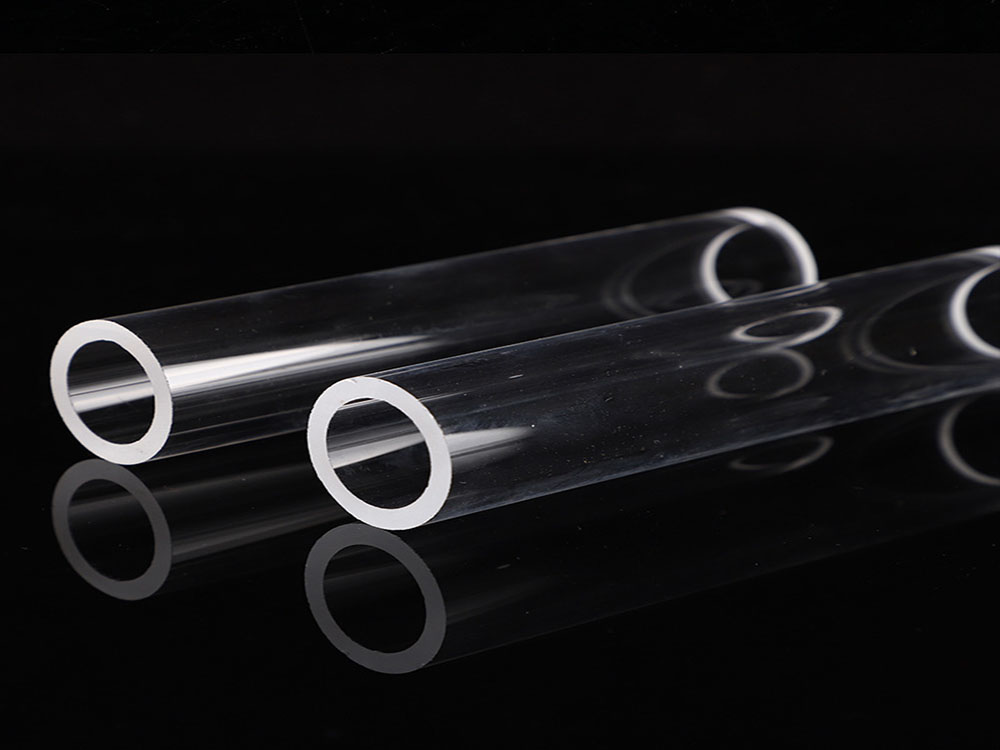
In specialized heating systems, large diameter quartz tubing may be considered when equipment requires a larger internal processing area. The suitability of a tube depends on its dimensions, wall thickness, temperature exposure, and the conditions under which it will operate. Similarly, custom fused silica plates may be evaluated for applications requiring specific shapes or dimensions in controlled industrial environments.
Material selection should never be based on temperature resistance alone. Chemical compatibility, mechanical support, surface quality, and manufacturing tolerances are also important. Engineers should consult technical specifications and verify that the selected material is appropriate for the complete operating environment.
Designing for Mechanical Strength and Stability
Mechanical stability is essential when equipment must support heavy components, maintain precise alignment, or operate continuously. Engineers need to consider static loads as well as forces created by movement, vibration, and thermal changes.
A structure that appears strong under normal conditions may become unstable when exposed to repeated stress. For example, a support bracket may gradually loosen because of vibration, while an improperly designed connection may experience additional strain as nearby components expand.
Computer-aided design tools allow engineers to evaluate different structural arrangements before manufacturing begins. Simulation can help identify areas where stress may become concentrated and where additional support may be necessary. However, simulation results should be supported by practical testing whenever possible.
Manufacturers should also consider how equipment will be installed and serviced. Components that are difficult to access may increase maintenance time and create additional safety risks. A design that allows straightforward inspection and replacement can improve long-term reliability.
Managing Heat Distribution and Insulation
Controlling heat distribution is another important part of industrial equipment design. Some applications require uniform temperatures throughout a processing area, while others need specific temperature zones. Poor heat management can lead to inconsistent product quality and unnecessary energy consumption.
Engineers should examine the location of heating elements, insulation materials, ventilation paths, and temperature sensors. The arrangement of these components influences how heat moves through the system. Inaccurate sensor placement can also create misleading temperature readings.
Insulation rings and other specialized components may be required to reduce unwanted heat transfer between different sections of equipment. In certain applications, custom quartz insulation rings can be considered when a system requires specific dimensions or material characteristics. Their suitability depends on the design, thermal conditions, and mechanical requirements of the assembly.
Heat management should be tested under realistic operating conditions. Engineers can compare temperature readings from different locations and determine whether the system maintains the required thermal profile.
Testing and Maintaining Equipment Over Time
A successful equipment design must perform reliably after installation, not just during initial testing. Testing should therefore cover the conditions the machine is expected to experience during normal operation and, where appropriate, more demanding situations within its specified limits.
Manufacturers can use inspection schedules to monitor wear, alignment, insulation performance, and the condition of critical components. Maintenance records help identify recurring issues and reveal whether a design modification could improve reliability.
It is also useful to collect feedback from operators. People who work with equipment every day may notice unusual sounds, temperature changes, or handling difficulties before these issues appear in formal inspection reports.
Equipment design should be treated as an ongoing engineering process. New operating requirements, improved materials, and manufacturing developments may create opportunities to improve older systems.
By considering thermal behavior, mechanical stability, heat distribution, and maintenance from the beginning, engineers can develop equipment that is better suited to demanding industrial environments. Careful design reduces avoidable failures and supports more dependable long-term operation.